

Introduction to Application Portfolio Management (APM)
On average, global companies can cut 20% to 30% of their IT expenses simply by eliminating redundant applications. For Enterprise Architects aiming for quick wins, Application Portfolio Management (APM) is a strategic area to prioritize.
That’s why it’s essential to clearly understand what APM is and why it deserves your full attention. In this guide, you’ll discover:
What is Application Portfolio Management (APM)
Why APM is vital for organizational success
The main goals of an effective APM strategy
Best practices to optimize your Application Portfolio
Different types of Application Portfolio Management
How to kick-start your APM journey
How ABACUS can enhance your APM efforts
What is Application Portfolio Management (APM)
Application Portfolio Management (APM) is a structured approach that helps organizations understand and manage all the software applications they use. It involves taking stock of every application to determine which ones are essential, which may be outdated or underused, and which are no longer cost-effective.
By analyzing how each application supports business goals, APM enables informed decisions about optimizing, replacing, or retiring systems. This process helps reduce costs, improve efficiency, and maintain flexibility as the organization’s needs evolve.
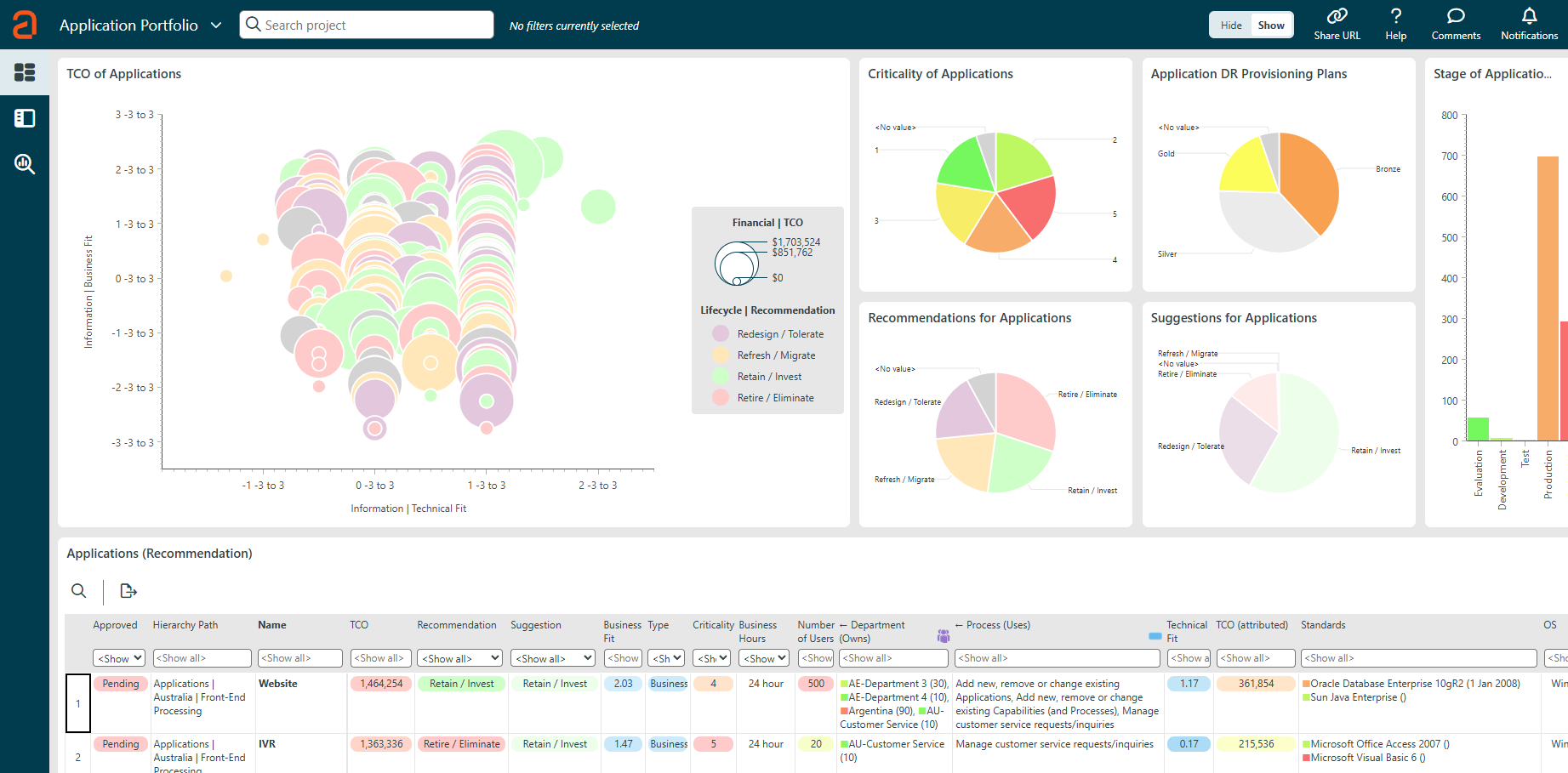

Application Portfolio on ABACUS
Why APM is vital for organizational success
Because of its wide-reaching impact, APM plays a vital role in driving organizational success. It can lead to substantial cost savings by identifying and eliminating unnecessary or redundant applications. At the same time, it fosters a more agile and innovative IT environment, enabling organizations to adapt quickly to evolving business needs.
APM also ensures that each application aligns with strategic objectives, which contributes to improved performance and a stronger return on investment (ROI). Additionally, it supports better risk management by helping organizations address security and compliance concerns more effectively.
Goals of an effective APM strategy
An effective APM strategy focuses on four key objectives: improving application performance, enhancing user experience, optimizing resource allocation, and ensuring application reliability.
Improving Application Performance
To boost performance, APM tools provide real-time visibility into system behavior, enabling teams to quickly detect and resolve issues such as slow response times, high error rates, or infrastructure bottlenecks. These insights also help identify areas for long-term improvement and prevent future disruptions by leveraging historical data for proactive management.
Enhancing User Experience
When it comes to user experience, APM tracks real interactions to uncover pain points, allowing organizations to refine performance and deliver smoother, more responsive applications. This not only reduces errors but also contributes to a more consistent and satisfying user journey.
Optimizing Resource Allocation
Resource optimization is another critical goal. By identifying underused or overburdened resources, APM helps IT teams allocate capacity more efficiently, reducing unnecessary costs and avoiding the need for additional infrastructure.
Ensuring Application Reliability
Finally, APM plays a crucial role in ensuring application reliability. Through continuous health monitoring and early alerts, it minimizes downtime and supports application stability, ensuring that systems remain dependable as demand grows or changes.

Recommendations for Applications on ABACUS
Best practices to optimize your Application Portfolio
To ensure successful Application Portfolio Management (APM) implementation, it’s essential to follow best practices that align with both business strategy and operational needs. A structured, goal-driven approach not only maximizes ROI but also minimizes disruption and improves stakeholder confidence. Below are key strategies to guide an effective APM process:
- Align APM with business goals: Every optimization effort should directly support current business capabilities and long-term organizational objectives. Avoid removing critical technologies without a clear understanding of their impact and always have a contingency plan to ensure continuity.
- Define clear objectives: Establish specific, measurable goals for your APM initiative. These objectives will serve as a guiding framework for decision-making and progress tracking.
- Evaluate ROI before adopting new technologies: Assess whether proposed solutions offer tangible value. Ensure that any new applications or tools are the right fit for your organization’s needs and will deliver a meaningful return on investment.
- Build a dedicated APM team: Assign clear roles and responsibilities to a core team responsible for overseeing APM efforts. This ensures accountability, consistency, and sustained progress.
- Maintain accurate, up-to-date data: The effectiveness of APM depends on reliable data. Regularly populate and update application inventories and performance metrics to support informed decision-making.
- Ensure strong communication channels: Foster collaboration between Enterprise Architects, IT teams, and users. Open communication helps uncover application pain points and align technical changes with user needs.
- Report progress regularly: Keep stakeholders informed through consistent reporting on application health, performance metrics, and key milestones. Transparency helps build trust and secure ongoing support.
- Adopt a phased, measured approach: Rather than rushing through changes, implement optimizations gradually. A steady, controlled solution reduces risk and allows time to adapt to feedback and unforeseen challenges.
Different types of APM
When implementing Application Portfolio Management (APM), it’s important to understand the different approaches that support its strategy. The two primary approaches to APM are Top-Down and Bottom-Up, each offering unique advantages depending on the organization’s goals and maturity level.
Top-down approach
This method begins with a high-level view of the application landscape and its alignment with business objectives. It involves identifying critical applications, evaluating their role in supporting core business processes, and determining their overall value. The top-down approach helps organizations make informed decisions about application investments, modernization, or retirement, ensuring that technology supports business priorities.
Bottom-up approach
The bottom-up approach focuses on technical analysis at the application level. It involves examining code, understanding dependencies, and assessing technical debt. This detailed perspective allows IT teams to optimize performance, improve reliability, and identify opportunities for cost reduction through streamlining or refactoring.
How to kick-start your APM journey
To successfully launch your Application Portfolio Management (APM) initiative, it’s essential to start with a clear understanding of your current environment and a well-defined strategic direction. A structured, step-by-step approach will help you gain meaningful insights, engage the right stakeholders, and lay a strong foundation for long-term success. Here’s how to get started:
- Assess your current application landscape: Begin by identifying all applications across the organization and documenting their purpose, usage, and dependencies. Understand how each application supports specific business capabilities and processes and assess its criticality to overall operations. Involving key stakeholders at this stage is crucial for capturing insights, identifying gaps, and ensuring alignment with strategic goals.
- Define strategic goals and performance metrics: Establish clear, measurable (SMART) objectives for your APM initiative. Define key performance indicators (KPIs) to evaluate application performance, cost, business value, and associated risks. Having well-defined metrics will guide decisions and demonstrate the value of APM over time.
- Collect and analyze application data: Gather relevant data on application usage, cost, technical health, and alignment with business needs. This analysis will help identify high-value applications, as well as those that may be redundant, underutilized, or candidates for modernization or retirement.
- Develop a roadmap and select the right tools: Choose an APM tool that aligns with your organization’s size, complexity, and goals. Then, create an implementation roadmap that outlines priorities, timelines, and resource allocation. Ensure the roadmap is realistic and adaptable as new insights emerge.
- Prepare for implementation and drive adoption: Communicate the purpose and benefits of APM clearly across teams. Address concerns and ensure that everyone understands how changes will impact their workflows. A strong management plan is essential to building support and ensuring long-term adoption.
How ABACUS can enhance your APM efforts

Criticality of Applications on ABACUS
ABACUS delivers a comprehensive APM software solution and portfolio management tools that automate and enrich every phase of your application portfolio journey. Pre‑built algorithms let you configure diagnostics to track health metrics such as cost, reliability, and risk, while flexible cost modeling covers both CapEx and OpEx (including indirect expenses like server costs) to build a complete cost profile for each application. Interactive portfolio management software dashboards enable real‑time assessments into your repository, so you can answer detailed questions quickly. You can also set up analytics to forecast metrics into the future.
Additionally, as a full‑featured Enterprise Architecture (EA) tool, ABACUS elevates your APM practice by:
- Linking applications to strategy: A unified, traceable repository connects each application to business capabilities, processes, data entities, and technology layers, ensuring every decision supports your strategic context.
- Impact & dependency analysis: Graph‑based visualizations reveal how changes ripple through integrations and data flows, minimizing risk when planning retirements, upgrades, or consolidations.
- Scenario modeling & what‑if simulations: Compare cloud‑migration, standardization, or modernization options side‑by‑side, quantifying costs, benefits, and risks to prioritize projects.
- Integrated metrics & governance: Custom dashboards blend financial, technical, and user‑experience data into a single pane of glass, while role‑based workflows streamline reviews, comments, and approvals directly within the platform.
Together, these capabilities help you not only catalog and monitor applications but also align them with long-term transformation goals, driving smarter investments, stronger risk management, and measurable ROI. Ready to get started? Download our Application Rationalization Checklist & Reporting Templates to kick‑start your APM strategy.
Conclusion
In today’s fast‑paced digital landscape, a structured APM approach that aligns your software with business goals, defining clear metrics, and combining top‑down and bottom‑up insights delivers tangible cost savings, performance gains, and risk reduction. With ABACUS as your end‑to‑end APM and EA platform, you get full visibility, impact modeling, and interactive dashboards to turn data into decisions.